Saturday, February 20, 2016

Deep Tissue Massage

deep tissue massage - Luc Novovitch/Photographer's Choice/Getty Images

What is Deep Tissue Massage?

Deep tissue massage is a type of massage therapy that focuses on realigning deeper layers of muscles andconnective tissue. It is especially helpful for chronic aches and pains and contracted areas such as stiff neck and upper back, low back pain, leg muscle tightness, and sore shoulders.
Some of the same strokes are used as classic massage therapy, but the movement is slower and the pressure is deeper and concentrated on areas of tension and pain in order to reach the sub-layer of muscles and the fascia (the connective tissue surrounding muscles).

How Does It Work? Techniques 

When there is chronic muscle tension or injury, there are usually adhesions (bands of painful, rigid tissue) in muscles, tendons, and ligaments. Adhesions can block circulation and cause pain, limited movement, and inflammation.
Deep tissue massage works by physically breaking down these adhesions to relieve pain and restore normal movement.
To do this, the massage therapist usesmassage oil and often uses direct deep pressure. Muscles must be relaxed in order for the therapist to reach the deeper musculature. 

Does Deep Tissue Massage Hurt?

At certain points during the massage, most people find there is usually some discomfort and pain.
It is important to tell the massage therapist when things hurt and if any soreness or pain you experience is outside your comfort range.
There is usually some stiffness or pain after a deep tissue massage, but it should subside within a day or so. The massage therapist may recommend applying ice to the area after the massage.

Benefits of Deep Tissue Massage

Deep tissue massage usually focuses on a specific problem, such as chronic muscle pain, injury rehabilitation, and the following conditions:
  • Chronic pain
  • Lower back pain
  • Limited mobility
  • Recovery from injuries (e.g. whiplash, falls, sports injury)
  • Repetitive strain injury, such as carpal tunnel syndrome
  • Postural problems
  • Muscle tension in the hamstrings, glutes, IT band, legs, quadriceps, rhomboids, upper back
  • Ostearthritis pain
  • Sciatica 
  • Piriformis syndrome
  • Tennis elbow
  • Fibromyalgia
  • Muscle tension or spasm
  • After a workout or bodybuilding
According to Consumer Reports magazine, 34,000 people ranked deep tissue massage more effective in relieving osteoarthritis pain than physical therapy, exercise, prescription medications, chiropractic, acupuncture, diet, glucosamine and over-the-counter drugs.
Deep tissue massage also received a top ranking for fibromyalgia pain. People often notice improved range of motion immediately after a deep tissue massage.

What Can I Expect During My Visit?

Massage therapists may use fingertips, knuckles, hands, elbows, and forearms during the deep tissue massage.
You may be asked to breathe deeply as the massage therapist works on certain tense areas.

Precautions

Massage is not recommended for certain people:
  • Infectious skin disease, rash, or open wounds
  • Immediately after surgery
  • Immediately after chemotherapy or radiation, unless recommended by your doctor
  • People with osteoporosis should consult their doctor before getting a massage
  • Prone to blood clots. There is a risk of blood clots being dislodged. If you have heart disease, check with your doctor before having a massage
  • Pregnant women should check with their doctor first if they are considering getting a massage. Massage in pregnant women should be done by massage therapists who are trained in pregnancy massage.
  • Massage should not be done directly over bruises, inflamed skin, unhealed wounds, tumors, abdominal hernia, or areas of recent fractures.

Tips and After Care

  • Don't eat a heavy meal before the massage.
  • If it's your first time at the clinic or spa, arrive at least 10 minutes early to complete the necessary forms. Otherwise, arrive 5 minutes early so you can have a few minutes to rest and relax before starting the massage.
  • A deep tissue massage may result in muscle soreness or tenderness, which may last a day or two. Your massage therapist may recommend icing any painful areas.
  • Drinking water after the massage may help to flush out toxins that are released from muscles and properly rehydrate muscles, which can help to reduce muscle aches and stiffness after a massage. 
  • Avoid strenuous activity after a massage.
  • Stretching can help to prevent muscle aches and pain after a deep tissue massage.
Disclaimer: The information contained on this site is intended for educational purposes only and is not a substitute for advice, diagnosis or treatment by a licensed physician. It is not meant to cover all possible precautions, drug interactions, circumstances or adverse effects. You should seek prompt medical care for any health issues and consult your doctor before using alternative medicine or making a change to your regimen.


Friday, February 19, 2016

The best program series I've seen in quite some time.


It's a beautiful Friday night, please enjoy your Life.
"Niko J"

HUMAN SPACEFLIGHT

Take Look Around

Only 552 People Have Been To Space. Virgin Galactic Is Opening Space To The Rest Of Us

Since the dawn of the space age, only 552 humans have traveled above the Earth’s atmosphere and into space. Throughout five decades of human spaceflight, the national space agencies in the United States, Russia, and China have inspired the world. But because government space agencies are not asked to help ordinary citizens to become astronauts, most of our planet’s seven billion people have had no opportunity to experience space and all of its possibilities for themselves, regardless of their passion or talents.

Virgin Galactic is changing that. Our purpose is to become the spaceline for Earth; democratizing access to space for the benefit of life on Earth.


Fully interactive site, must see.

$250,000


U.S. air raid hits Islamic State in Libya, 43 dead

U.S. warplanes launched air strikes against a suspected Islamic State training camp in western Libya on Friday, killing more than 40 people, likely including a militant connected to two deadly attacks last year in neighboring Tunisia.
It was the second U.S. air strike in three months against Islamic State in Libya, where the hardline Islamist militants have exploited years of chaos following Muammar Gaddafi's 2011 overthrow to build up a presence on the southern shores of the Mediterranean Sea.
The Pentagon said it had targeted an Islamic State training camp. The facility in the city of Sabratha was linked to Noureddine Chouchane, a Tunisian blamed by his native country for attacks last year on a Tunis museum and the Sousse beach resort, which killed dozens of tourists.
"Destruction of the camp and Chouchane's removal will eliminate an experienced facilitator and is expected to have an immediate impact on ISIL's ability to facilitate its activities in Libya, including recruiting new ISIL members, establishing bases in Libya, and potentially planning external attacks on U.S. interests in the region," the Pentagon said, using an acronym for Islamic State, also known as ISIS or Daesh.
U.S. officials said Chouchane is most likely dead but White House spokesman Josh Earnest said he could not yet confirm the results of the air assault. He said the raid showed U.S. willingness to fight Islamic State.
"It's an indication that the president will not hesitate to take these kinds of forceful, decisive actions," Earnest said.
In Libya, photos released by the municipal authorities showed a massive crater in gray earth. Several wounded men lay bandaged in hospital.
The mayor of Sabratha, Hussein al-Thwadi, told Reuters the planes hit a building in the city's Qasr Talil district, home to many foreigners.
Locals officials said 43 people were killed.
The strikes targeted a house in a residential district west of the center, municipal authorities said in a statement.
The house had been rented to foreigners including Tunisians suspected of belonging to Islamic State, and medium-caliber weapons including machine guns and rocket-propelled grenades had been found in the rubble, the statement said.
The air strikes came just days after a warning by President Barack Obama that Washington intended to "take actions where we've got a clear operation and a clear target in mind" against Islamic State.
Britain said it had authorized the use of its airbases to launch the attack.
Islamic State runs a self-styled caliphate across swathes of Iraq and Syria, where it has faced air strikes from a U.S.-led coalition since 2014.
DEEPER INTO CHAOS
Since Gaddafi was overthrown five years ago by rebel forces backed by NATO air strikes, Libya has slipped deeper into chaos, with two rival governments each backed by competing factions of former rebel brigades.
A U.N.-backed government of national accord is trying to win support, but is still awaiting parliamentary approval. It is opposed by factional hardliners and has yet to establish itself in the capital Tripoli.
Islamic State has expanded, attacking oil ports and taking over Gaddafi's home city of Sirte, now the militant group's most important stronghold outside its main redoubts in Syria and Iraq.
Calls have increased for a swift Western response to stop the group establishing itself more permanently and using Libya as a base for attacks on neighbours Tunisia and Egypt.
Western officials and diplomats have said air strikes and special forces operations are possible as well as an Italian-led "security stabilisation" plan of training and advising.
U.S. and European officials have in the past insisted Libyans must first form a united government and ask for help, but they also say they may still carry out unilateral action if needed.
The United States estimates that the number of militants directly affiliated with Islamic State or sympathetic to it now operating in Libya is in the “low thousands,” or less than 5,000, a U.S. government source said.
Last November the United States carried out an air strike on the Libyan town of Derna, close to the Egyptian border, to kill Abu Nabil, an Iraqi commander in Islamic State.
A U.S. air strike targeted veteran Algerian militant Mokhtar Belmokhtar and other jihadists meeting in eastern Libya last June. His fate is unclear.
(Additional reporting by Warren Strobel and Mark Hosenball and Roberta Rampton in Washington and Michelle Nichols at the United Nations; Writing by Dominic Evans and Peter Graff; Editing by Patrick Markey, Alison Williams, Andrew Roche and Alistair Bell)

Explore Nicaragua Online

Managua

Besides its capital city, which is the administrative center of the country, the department of Managua has many attractions. Its territory has coasts on the Pacific Ocean and also goes through the 'Sierras de Managua' (low mountains) and continues on the wide plains that surround most of Lake Xolotlan (also known as Lake Managua).
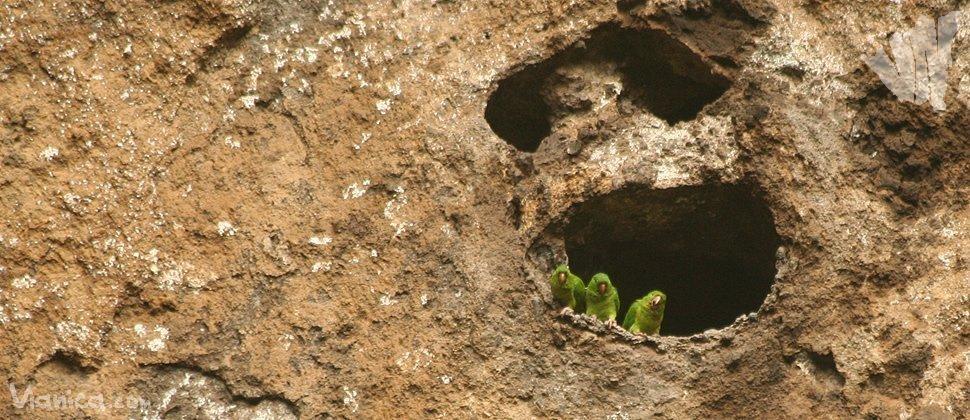
The department has famous beaches that are easily reachable and include luxurious or rustic tourist infrastructures. A few of them remain unexplored. Also, Managua has three important natural reserves: the Chiltepe Peninsula with two volcanic lagoons, the El Chocoyero - El Brujo natural reserve and the Montibelli Natural Reserve, which famous for being a birdwatching destination.
The region was home to many indigenous tribes, all of them absorbed by the cultural and ethnic mix of colonial times. Furthermore, visitors can see artifacts and even prehistorical traces in local museums. Also, there are many historic sites offering information about important episodes of the Nicaraguan recent history.
Managua measures 3,465.10 Km². Its tropical savannah climate gives the area mostly warm temperatures throughout the year. The only exception to this characteristic is the area of the 'Sierras de Managua'. About a 91.1% of its population live in the many cities and towns of its territory, although there is a large rural productive area. Managua has nine municipalities with a lot of destinations to visit.

Municipalities

  • Managua

    Located in a valley that goes from the 'Sierras de Managua' (South) to the shores of Lake Xolotlan (North), this municipality is mainly occupied by its capital city, which is the administrative and political center of Nicaragua. Managua has its own personality: its chaotic design gathers several modern residential areas, poor settlements, volcanic lagoons, shopping malls, a hectic nightlife, hotels, restaurants and tour operators.
  • Ciudad Sandino

    The capitol city of the municipality of Ciudad Sandino is the second most important one after Managua. Even though there are not significant tourist attractions, the municipality has many farms and shores in Lake Nicaragua. The local festivities are held in honor of San Francisco Javier on December 3rd. Furthermore, its inhabitants are also part of the celebrations in honor of Santo Domingo de Abajo, in August.
    • El Crucero

      Located on the summit and slopes of the 'Sierras de Managua', this municipality is known for its cool weather, despite being in the middle of a department of warm temperatures. Its urban center is the town of El Crucero, which has a hotel, a canopy tour, many restaurants serving international food and viewpoints with panoramic views. An interesting site is the community of El Ventarron, from where one can see the ocean and feel the strong winds that do not allow anything grow except grass and a few trees. Fog is also common in the area, as well as a sulfur smell brought by the winds coming from the Masaya Volcano.
      • Mateare

        The major attraction of this rural municipality is the Chiltepe Peninsula Natural Reserve, situated on the shoreline of Lake Managua. The Xiloa Lagoon, which has a tourist center, is located here, as well as the little known (and barely accessible) Apoyeque Lagoon. There are other attractions like a small forest and some caves on the southern side of town. In addition to Mateare, the capitol, other important centers are Los Brasiles and San Andrés de la Palanca.
      • San Francisco Libre

        Also known as San Francisco del Carnicero (former name), this remote rural municipality has many plains and hills. It is located on the Northern side of Lake Managua and also has a wide shoreline in it. There are several livestock and agricultural farms, which also preserves a wild forest partially affected by loggers. In addition to the rural town of San Francisco, which is the capitol of the community, one can find several scattered communities. The only hydro-mud therapy hospital in the countr is located near the the capitol town; it offers treatments, tours and lodging options.
        • San Rafael del Sur

          The beaches of Pochomil, Masachapa and Montelimar are the main attraction of this municipality. The three of them are easily accessible and have tourist infrastructure (rustic and luxurious). The small town of San Rafael del Sur is the capitol of this municipality. This territory covers coasts, where one can find beautiful sugar cane landscapes, mountainous slopes that are also part of the 'Sierras de Managua' and some preserve inacessible forests.
        • Ticuantepe

          Natural landscapes, fauna, flora and archaeological remains are part of the attractions of this municipality. Visitors will find natural reserves such as El Chocoyero - El Brujo and Montibelli. Also, the National Zoo is located here, with diverse national exotic species. Its urban center is the small city of Ticuantepe, which as a nice archaeological museum and many parks. There are other villages nearby, where wide pineapple plantations can be seen. Furthermore, Ticuantepe has several restaurants, hotels and tourist centers along the highway that crosses the whole territory.
        • Tipitapa

          This municipality of flat lands has several attractions, such as the coasts on Lake Managua or the Tipitapa riverbanks. The San Jacinto Hacienda, an important stie during a historical important battle, features a nice museum in its interiors. The tourist center of El Trapiche, which has wide ponds surrounded by infrastructure and some restaurants, is also located here. Furthermore, the municipality is also known for its pools of thermal waters. The city of Tipitapa is the urban local center. Here, visitors will find good restaurants; some of them offer the famous 'Pescado a la Tipata', which basically consists on a boneless fish. The local festivities are held from January 6th to 30th, in honor of the 'Señor de Esquipulas' or the Black Christ.
        • Villa Carlos Fonseca

          Better known as Villa El Carmen (former name), this rural municipality has coasts in the Pacific. Its many beaches are quite solitary, have little infrastructure and are rarely known. Although, there is a surf hostel and houses for rent. The territory is flat and occupied by livestock and agricultural farms. The town of Villa El Carmen is the urban center. Also, it has villages and fishing villages.


        1000 Life Hacks


        You may wish to bookmark this.


        Featured Posts

        Rental Properties for Sale, Santa Marianita, Ecuador

          Beautiful rental with beach access. Utilities and WiFi are included, just bring your food and move in. *Be sure to ask about our long-term...

        Popular Posts